
 by Matteo Modica
5 MIN. READ
15.11.2026
by Matteo Modica
5 MIN. READ

Every boutique branding agency says it picks its clients. What really sets one apart from another are the reasons behind each no. Here are ours.
Sublimio is a boutique branding studio, and for us that’s not just a nice word on the About page. It means we only take on a small number of projects every year. And it means that, every now and then, we have to say no.
I won’t pretend this makes us special. Plenty of studios work this way, and “we’re selective” has become almost a standard line in agency pitches. Ask around, and every small agency will tell you it chooses its clients carefully.
What you rarely hear is how. On what grounds does an agency decide that a project is not for them?
Over the years I’ve come to think this is where the real differences lie. The reasons behind a no tell you more about a branding agency than any list of yeses in a portfolio. So here are the reasons we end up turning down clients. They’re not a secret, and if you’re thinking about working with us, I’d actually rather you knew them in advance.
When our values don’t match (and why it’s not about purity)
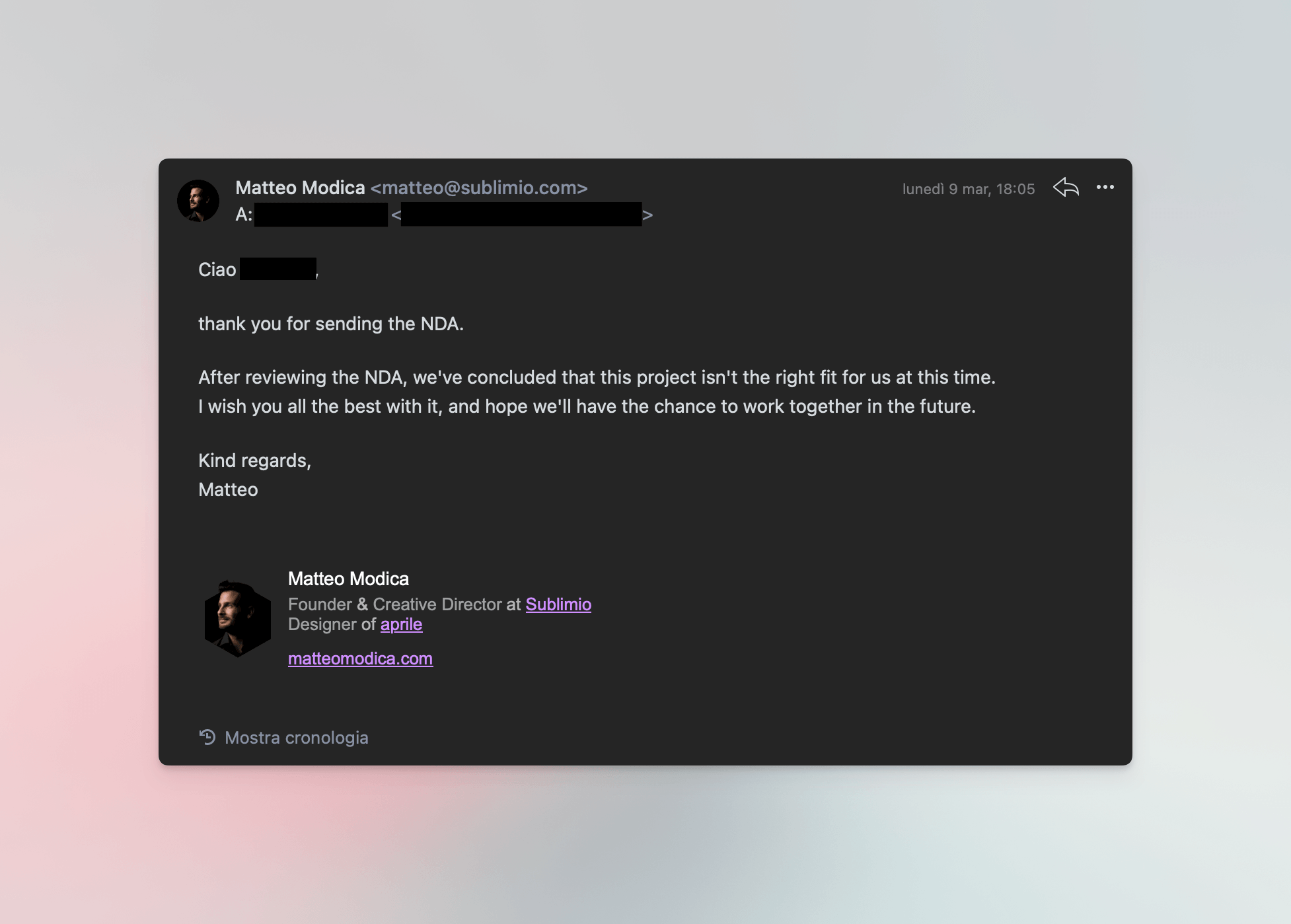
The first reason is the most obvious one, and the one we have tested the hardest. There are clients and markets we don’t work with, because we don’t share their values. Weapons and tobacco are the easy examples, but the principle goes beyond any fixed list: if we can’t find a real affinity with what a company believes and does, we step back.
This rule has cost us. We have turned down opportunities that were very interesting, creatively and financially, because they didn’t feel aligned. I won’t lie: saying no in those moments was not fun.
But I’d like to be clear on one thing. This is not about keeping our hands clean or feeling morally superior. It’s a much more practical matter. Branding runs on conviction, and when you work against your own values, you work worse. You hold back, you second-guess every choice, and you end up producing something you don’t fully own.
A client deserves a team that believes in what it’s building. That’s not something we can fake. Designers have been drawing this line for a long time: the First Things First manifesto said it as early as 1964.
When the scope is too narrow
The second reason has to do with how we see branding. At Sublimio we take a holistic approach: we believe strong brands come from a wide view of the business, its audience and the culture around it, not from a checklist of deliverables.
Coming from industrial design, I tend to see it this way. You wouldn’t design a chair without knowing who is going to sit on it, where, and for how long. A logo is no different. It works best when it’s the visible end of a broader way of thinking about the brand.
So when a request is purely instrumental – just a logo, just a refreshed visual identity, with no room to look at the bigger picture – we’re usually not the best fit. There’s nothing wrong with those projects, and there are excellent designers who do them brilliantly. But we would be bringing a method built for depth to a brief that doesn’t ask for it, and neither side would get the most out of it.
When we can’t see ourselves being proud of it
This one can sound a bit vain, so let me explain. Before taking on a project, we ask ourselves a simple question: will we be proud to show this in our portfolio one day?
It’s not about collecting trophies. It’s a way to estimate, before we start, how much potential a project really has. If we can’t imagine the result being something we’d want to show, chances are the conditions for doing good work just aren’t there. In this sense, pride is a stand–in for quality.
And since we only take on a few projects a year, we want each of them to have a real chance of becoming its best possible version.
When the budget doesn’t allow us to make a difference
Budget is the most delicate reason to talk about, because it’s the easiest to misunderstand. We don’t give priority to whoever pays more. That’s simply not how we choose.
What a budget tells us is how deep we can go. Branding done properly takes time: research, strategy, rounds of exploration, the slow work of getting the details right. If the budget is too tight, we would have to cut our contribution so much that we wouldn’t have any real impact. We would deliver something, but not something that changes things for the brand.
In that case, saying no is more honest than saying yes to a watered-down version of what we do. The right budget is not the biggest one. It’s the one that lets us work in depth.
When we don’t agree on what branding is worth
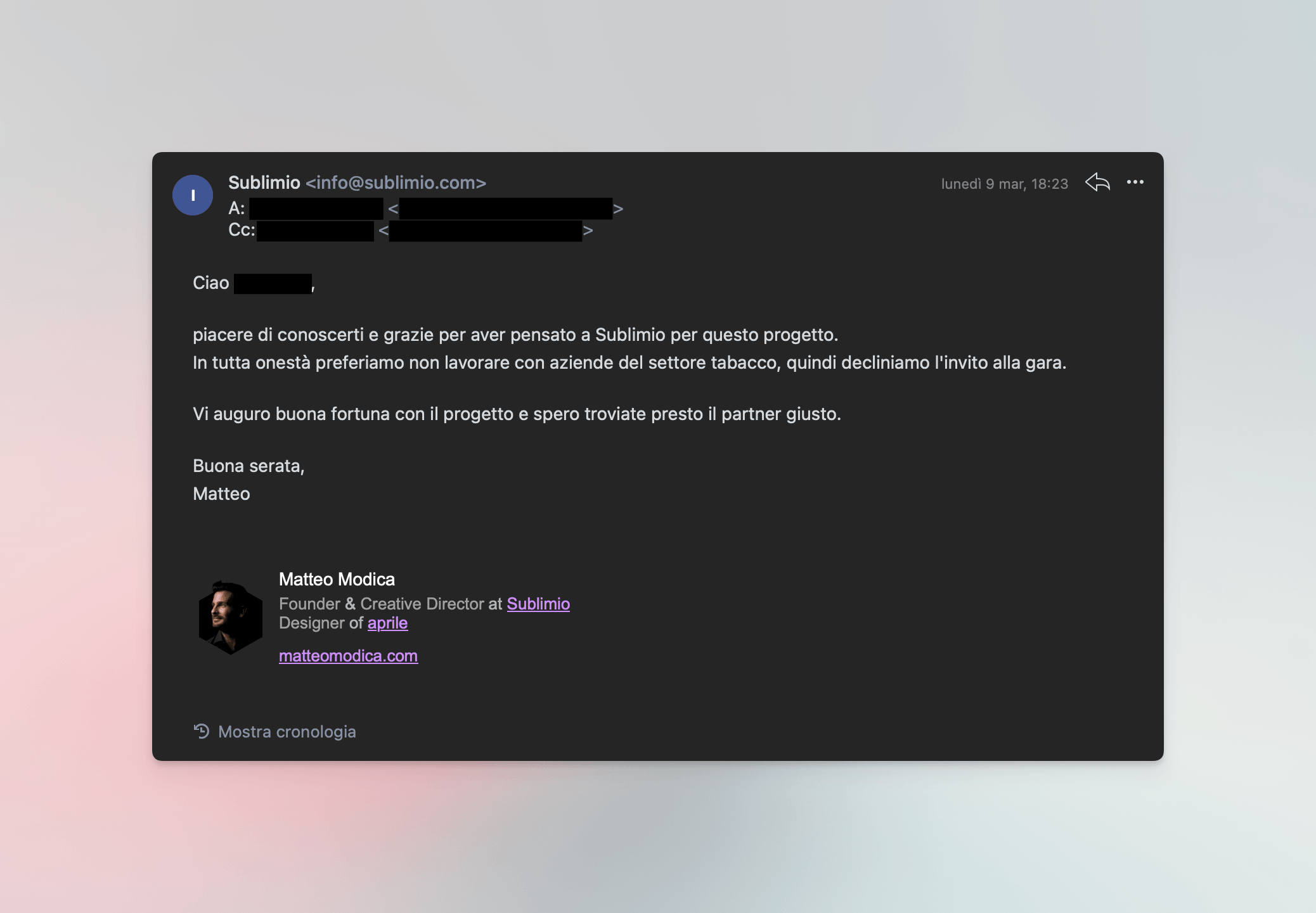
Values are not the only thing we need to share with a client. There’s also a more professional kind of alignment, and it’s about the value of branding itself.
We believe branding has a real effect on a business (my colleague Andrea has written about brand equity and how to explain it to your CFO). For us it’s not decoration, and it’s not the last item on the launch checklist.
If a client sees it differently, they will probably have a hard time with us. We’ll insist on things they consider minor, spend time where they’d rather save it, and ask questions that may feel unnecessary to them. Nobody is wrong here. We are simply playing different games, and it’s better for both sides to find out early.
When we’re not the right branding studio for the job
The last reason is the one I’m most fond of, because it points the finger at us.
Sublimio has received its share of recognition over the years, and we’re proud of it. But we also know, quite clearly, where we’re strong and where we’re less so. Some briefs fall right into our territory. Others would be better served by a different kind of agency, with different skills.
When we see that we wouldn’t bring enough value, we say so ourselves. Often we tell the client that we could help with something else, just not with this particular brief. It’s not always an easy conversation, but I’ve found that clients appreciate it far more than a yes that would disappoint them six months later.
What saying no means for a boutique branding agency
Looking back at this list, I realize that most of these reasons are not really about clients. They’re about us: what we believe, how we work, what we need to do our job well. For a boutique branding studio, choosing who to work with isn’t a side effect of being small. It’s the whole point.
That’s why I think they’re worth sharing. If you’re choosing a branding agency, ask them when they say no, and why. You’ll learn a lot about what it’s like to work with them.
And if one day we say no to you, I hope you’ll take it for what it is: the most useful answer we could give at that moment.
READ MORE ON
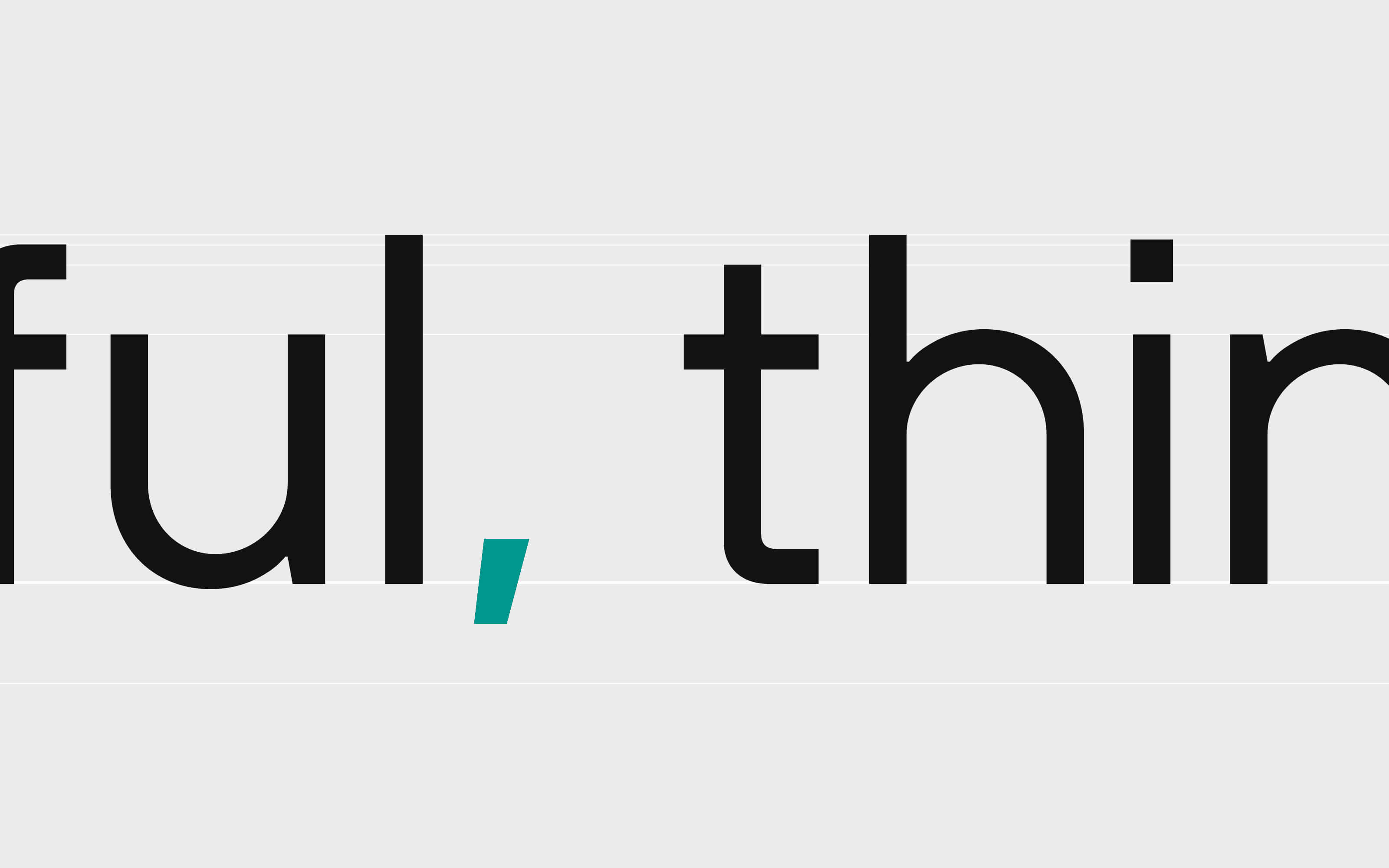
The comma nobody sees: why attention to detail in branding still matters
Nobody notices when I change the color of a comma, and that’s exactly why I keep doing it. A case for perfectionism and attention to detail in branding.

Before you hire a branding agency, ask to see the drafts
A while ago, at Sublimio we started sharing with potential clients not just our portfolio, but our past presentation. Here’s why.

Can AI do your brand strategy?
AI can craft a pretty believable brand strategy, but will it hold? Here are some things to know before you forward it to the team.
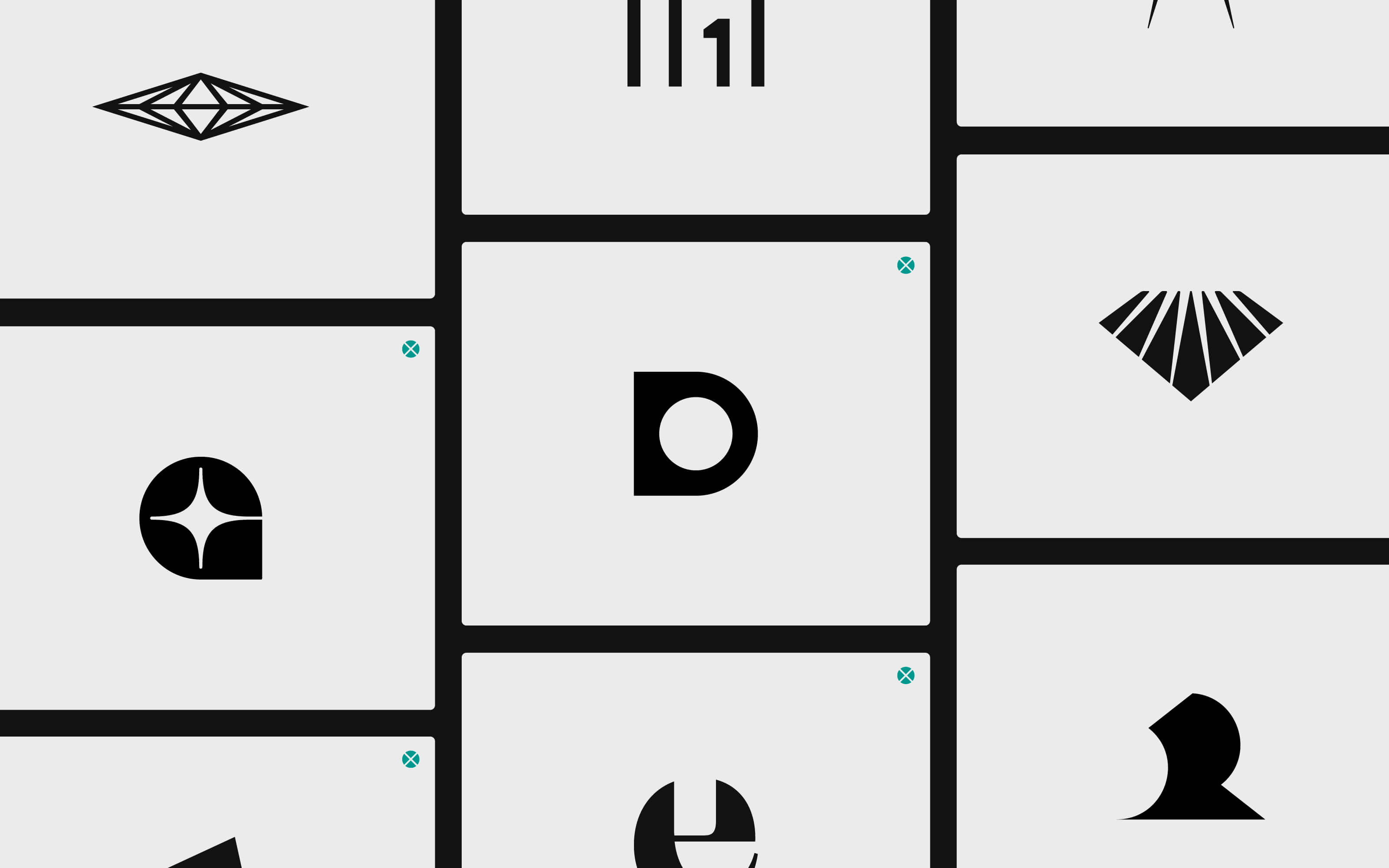
Rejected Logo Designs We Still Love
Not all logo designs get accepted. Actually, most of them get rejected, and that’s ok. Here’s why we don’t throw ours away.
our newsletter
SUMO is one of the few newsletters I don’t archive when my inbox gets full. Each edition feels crafted with care - the links are genuinely interesting, the curation is thoughtful, and the newsletter design itself is a delight to consume.

Content curation at its finest. Doesn't overdo it on commentary, and has probably the highest signal-to-noise ratio among the design newsletters out there. Never a dull entry! Every issue feels handpicked rather than churned out.

Sublimio Monthly is always a breath of fresh air. I especially like how each issue explores one timely theme, turning Andrea and Matteo’s perspectives into a clear takeaway I can immediately apply to my work—often before the topic becomes mainstream.

You know that feeling as a kid, waiting for your favorite magazine to hit the stands? That's what SUMO is for me.

SUMO is much more than a newsletter: it's a guide. In a world of information overload, having someone who does real curation work is invaluable. What I find there is always worth my time. I read it eagerly every time, and I often share it with friends and colleagues because there's always something useful and genuinely interesting.

SUMO has a level of intentionality that sets it apart from most newsletters I read. Each edition is built around a theme that feels considered without being overworked, with Matteo and Andrea’s dual perspectives adding depth and a set of curated links that feel carefully chosen. It’s a newsletter worth reading properly.

SUMO has quickly become one of my favourite newsletters. Every issue leaves me with a fresh perspective on how I see my brand and the world around it.




© 2009—2026 Sublimio


