
 by Matteo Modica
4 MIN. READ
28.10.2025
by Matteo Modica
4 MIN. READ
by Matteo Modica
4 MIN. READ
28.10.2025
by Matteo Modica
4 MIN. READ

Getting design and strategy on the same page is not easy, but it’s vital to your branding project. That’s how we work at Sublimio.
There are many different ways to interpret the practice of branding, and every branding studio will eventually find its own.
At Sublimio, we have carefully considered what works best for us, or at least how we tend to operate “by default.” We‘ve distilled our approach into two words: Beautiful Thinking.
So, what exactly does “Beautiful Thinking” mean?
You might notice our fondness for a good oxymoron (or at least an apparent one). While “beautiful“ and “thinking“ aren‘t truly incompatible concepts, in our modern world, they often exist separately. Things are either beautiful, or they are thoughtful.
This brings to mind what the legendary Italian designer Bruno Munari once said: “There shouldn’t be beautiful things to admire and ugly things to use.”
He advocated for a design practice that seamlessly blends a pleasing aesthetic with functional utility. The same can be said for branding, which encompasses both a strategic and a design component.
These two aspects are meant to work in harmony, yet they often seem to have developed independently, with design prioritizing its own aesthetic satisfaction and strategy focusing on creating frameworks and concepts. Strategy might dismiss design as superficial, while design might view strategy as uninspired.
We disagree with that.
Having a deep love both for spotless design and deep–thinking strategy, we have found the two make each other stronger.
That’s especially important as our vision is to create strong brands, which will have to face the market, perform and survive.
Design without strategy: the beauty contest
A beautiful brand design system is deeply satisfying to create. For any designer, this is a moment of bliss, a chance to channel their own aesthetics and to experiment with new ideas.
And yet, in this seduction lies danger. If we chase beauty alone, we’ll make everyone happy, until reality hits. Reality can be the competitor, the market, or simply the way our message or positioning does or doesn’t cut through.
Then it’s like arriving all dressed up to the wrong party. Deeply embarrassing.
Online design galleries are filled with beautiful brands, but only a few of them truly exist and perform daily on the market. In that case, the designer did a wonderful job, but a part was probably missing.
Strategy without design: only words
On the other hand, strategy satisfies the inquisitive mind. It offers a chance to dive deep and feel like you are truly unearthing a profound truth.
Strategy can set a brand on the right course and position it perfectly. However, no one will care. While strategy provides structure and direction, people are ultimately seduced by how a brand “feels.”
In this scenario, you‘ve gone to the right party, but you have no dress. Equally embarrassing.
Under-designed brands with a strong strategy may sound appealing in a room full of business people, but they will be all reason and no dream.
Strategy and design need a constant dialogue
To achieve this, design and strategy must integrate. However, this integration shouldn’t involve working in silos. Such an approach often leads to strategy neglecting the design phase and design viewing strategy as an unnecessary hindrance—a common pitfall.
Our Beautiful Thinking methodology circumvents this by ensuring the strategy phase establishes foundational principles that enable design to function as a branding force. Concurrently, design expresses itself while consistently referencing these strategic underpinnings.
The outcome of the Beautiful Thinking approach is generally more comprehensively satisfying. You can appreciate the result without fully grasping its origins, yet every single decision can be logically explained.

Beautiful Thinking at work: some real-world examples from the Sublimio portfolio
A prime example of strategy and design collaborating in a Beautiful Thinking approach is Frontman, a brand specializing in tech jewelry.
This innovative company creates high-end ornaments for tech accessories like smartphones and earbuds, offering a truly contrarian view that defies the minimalist credo of typical tech gadgets.
The entire strategy aimed to target affluent young individuals who were weary of the anonymity inherent in common tech design. In its stance against bland modernity, the brand drew inspiration from the past.
We looked to the world of rockstars, individuals who actively chose to stand out rather than blend in. Simultaneously, we needed to maintain a very premium positioning for the product. This dual objective resulted in a hybrid design that seamlessly combines elegance with rock aesthetics.
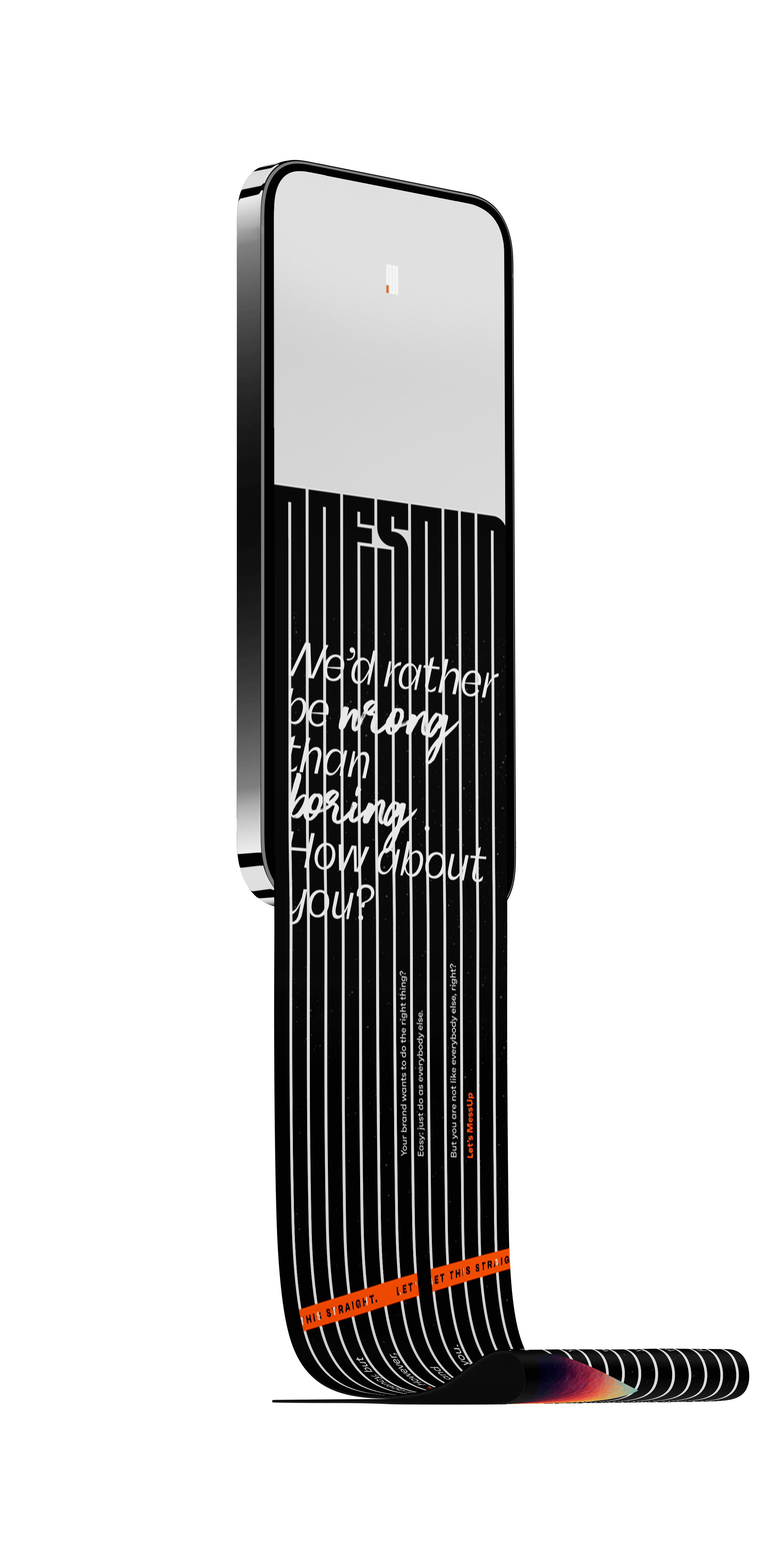
For MessUp, a friend agency whose identity and website we helped design, the strategy centered on being an alternative to cookie–cutter agencies that rely on best practices. Indeed, starting with its name, MessUp aimed to defy best practices and embrace human imperfection.
This was sharply reflected in the design phase, with an almost obsessive attention to violating rules of legibility, visual order, and website usability. Pretty radical.
These are just two examples: every single work from our portfolio went through the same process, even though in different ways based on the specific challenges of the project.
Beautiful Thinking: great, not easy
The best things are usually not the easiest ones and that also applies to Beautiful Thinking.
While we couldn’t work differently, it requires a great deal of open communication and humbleness both from the strategy and the design side.
Rather than working in phases, professionals with a different point of view on branding need to find a common ground.
READ MORE ON

How We Make Website Design That is Not Boring
Website design often comes last after everything has been already decided. And yet, it’s still a central part of brand experience.

Verbal Identity: How We Craft the Voice of a Brand
Brand typography can be seen as a detail, but it’s the living spirit of a brand. This is how we do it at Sublimio.
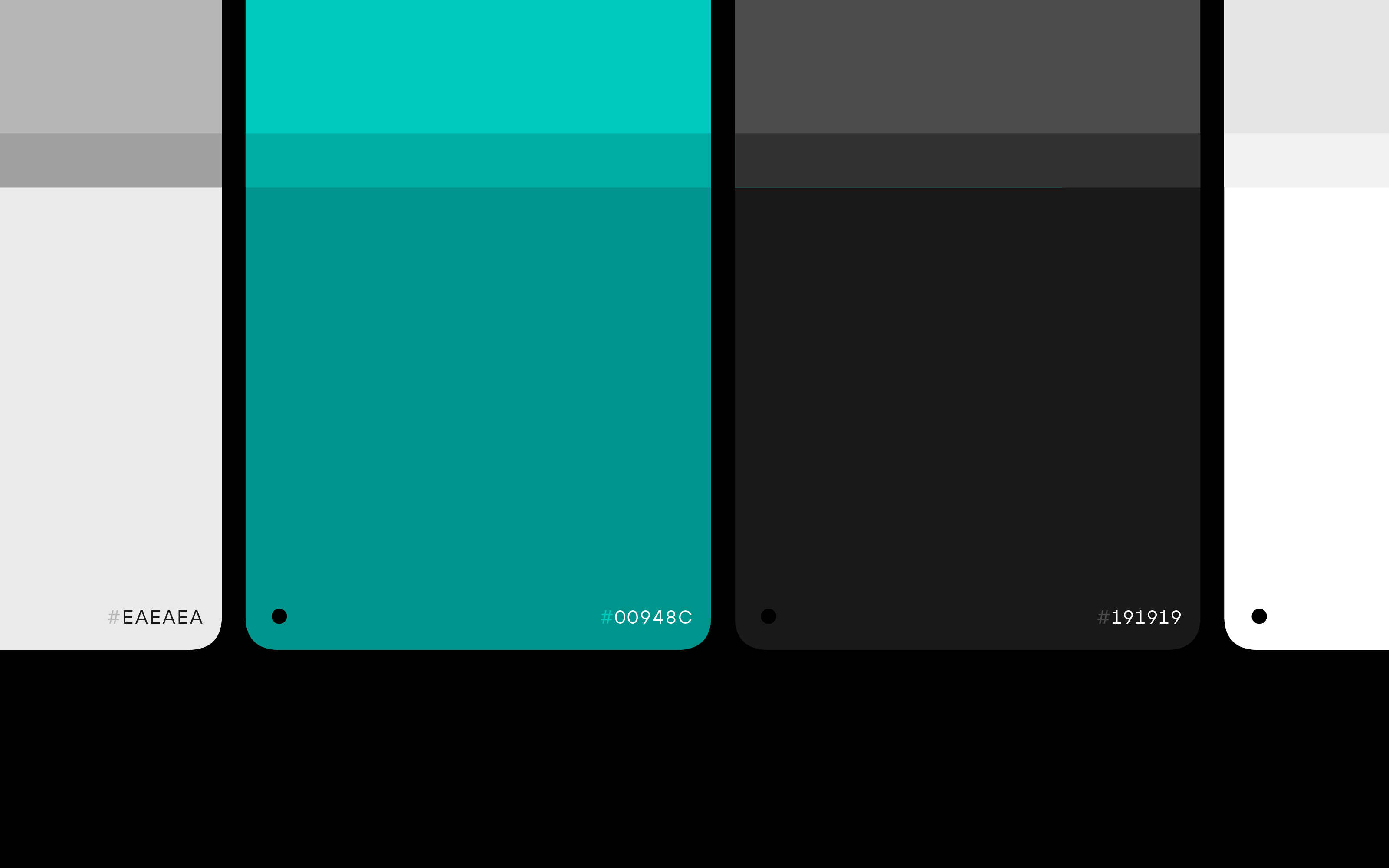
How We Choose Brand Colors for Impact
Choosing brand colors is never easy. But it helps to have a rough idea of why you are picking one over another.

Why Our Branding Agency is Called Sublimio
What’s in a name? More exactly, what’s in our name? Well, probably more than you think. Here’s where it comes from.
our newsletter




© 2009—2026 Sublimio


